
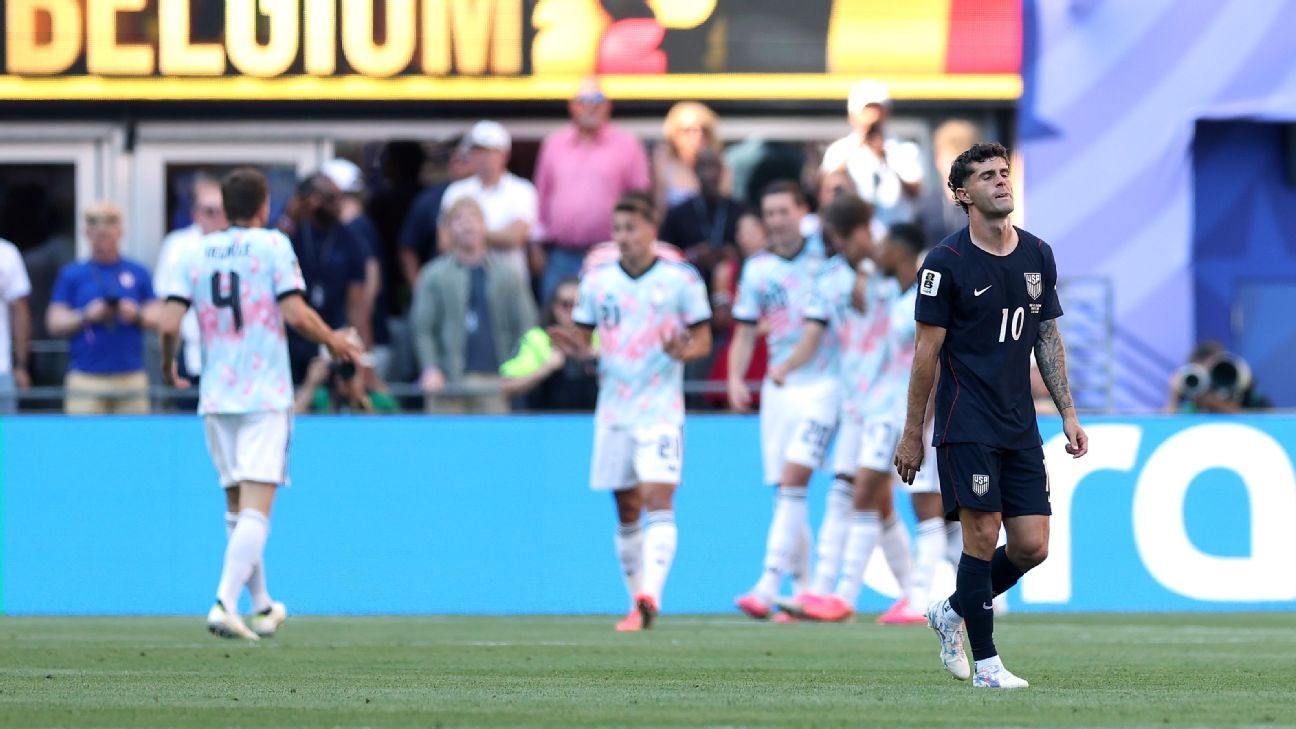
United States' World Cup Journey Concludes After Belgium Defeat
The aspirations of the United States men's national soccer team in the World Cup came to an end following a decisive 4-1 loss to Belgium on Monday. The match, which saw Belgium exert considerable dominance, marked the conclusion of the U.S. team's run in the prestigious international tournament. Throughout the game, Belgium showcased a compelling performance, demonstrating superior tactical execution and individual skill that ultimately proved too formidable for the American squad.
Match Dynamics and Key Moments
From the outset, Belgium established a strong presence on the field, dictating the pace and creating numerous scoring opportunities. Their offensive strategies were multifaceted, combining swift counter-attacks with sustained pressure in the U.S. defensive third. The Belgian team's ability to transition from defense to offense with remarkable speed and precision was a recurring theme, often catching the U.S. defense off guard. Early in the first half, Belgium managed to penetrate the U.S. backline, capitalizing on an opening that led to their initial goal. This early lead provided them with a significant psychological advantage, allowing them to play with increased confidence and control.
Despite falling behind, the United States team attempted to rally, displaying moments of spirited play and determination. They sought to disrupt Belgium's rhythm and create their own chances, particularly through the flanks and set-piece opportunities. However, Belgium's defense remained largely impenetrable, efficiently neutralizing many of the U.S.'s attacking efforts. The American midfielders struggled to maintain possession for extended periods under the relentless pressure from their Belgian counterparts, which limited their ability to build cohesive offensive plays.
Belgium's Strategic Superiority
Belgium's victory can be attributed to several factors, including their disciplined defensive structure, creative midfield play, and clinical finishing. Their players demonstrated a high level of understanding and coordination, moving the ball with purpose and exploiting any weaknesses in the U.S. formation. The strategic deployment of their key players allowed them to control the central areas of the pitch, effectively cutting off supply lines to the U.S. forwards. This tactical acumen was evident in their ability to score multiple goals, each a testament to their collective effort and individual brilliance.
As the match progressed into the second half, Belgium continued to extend their lead, adding to their goal tally and further solidifying their dominance. Each goal underscored the disparity in performance on the day, highlighting Belgium's efficiency in front of the net. While the U.S. team did manage to score a consolation goal late in the game, it was not enough to alter the outcome or the overall narrative of Belgian superiority. This late goal, while offering a brief moment of celebration for American fans, ultimately served as a minor footnote in what was a comprehensively controlled performance by Belgium.
Implications for the United States Program
The defeat serves as a significant learning experience for the United States men's national team. Participating in the World Cup, especially in the knockout stages, provides invaluable exposure to the highest levels of international competition. Analyzing this match will undoubtedly offer insights into areas requiring improvement, both in terms of individual player development and team strategy. The experience gained from facing a top-tier team like Belgium is crucial for the long-term growth and evolution of the U.S. soccer program.
For Belgium, the victory propels them further into the tournament, reinforcing their status as a formidable contender. Their performance against the United States was a clear demonstration of their capabilities and their ambition to advance deep into the competition. As for the United States, while their World Cup journey has concluded, the lessons from this match will be instrumental in shaping their future endeavors on the international stage, as they look ahead to upcoming qualifiers and future tournaments with renewed focus and strategic adjustments.
Source: ESPN